
When you think of Abu Dhabi, your mind likely drifts to the serene white marble of the Sheikh Zayed Grand Mosque, the dizzying speeds of Ferrari World, or the cultural treasures of the Louvre.
But tucked away along the 2.2-kilometer waterfront stretch of Al Qana—the region’s largest lifestyle and dining destination—lies a portal to the planet’s most mysterious frontier.
I’m talking about The National Aquarium Abu Dhabi.

I recently dedicated an entire day to exploring this 7,000-square-meter marine facility, and I left with wet hair (thanks to the splash zone), a full camera roll, and a newfound respect for the conservation efforts happening right here in the UAE.
After devouring every page of their website—from the species directory to the wildlife rescue blog—I can confidently say this isn’t just an aquarium. It’s a narrative.
Here is my ridiculously detailed account, plus a special shoutout to VooTours for handling the logistical chaos so I could focus on the wonder.
First Impressions: Al Qana & The Lobby
The moment you step into Al Qana, the architecture signals you’re somewhere special. The National Aquarium building is sleek, modern, and massive—it holds 46,000+ animals across 300+ species.
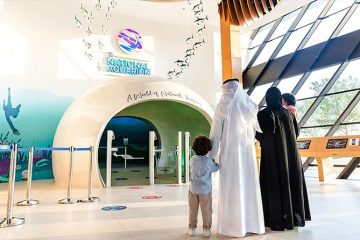
But the lobby itself is an experience. Forget the chaotic ticketing lines you see at other attractions. Here, the check-in process is smooth, the lighting is moody (think deep blues and greens), and the ceiling is adorned with swirling mobiles of fish.
Where VooTours came in immediately: Instead of me standing at a kiosk trying to decipher whether the “Premium” ticket included the glass-bottom boat or just the cave tour, I had already messaged my contact at VooTours weeks before.
They sent me a simple PDF with three package options, explained the differences in plain English, and booked the “Ultimate Explorer” pass for my family. When we arrived, we walked straight to the priority counter. No stress. No arguments. Just pure vacation mode.
The 10 Zones: A Journey Across the Planet’s Waters
The aquarium is cleverly divided into 10 distinct ecological zones. You don’t just walk through a building; you travel the world.
Zone 1: UAE’s Natural Treasures
This is the homecoming. Before you see Amazonian piranhas or Pacific sharks, you meet the locals. Tanks replicate the waters of the Arabian Gulf and the Indian Ocean. You’ll see:
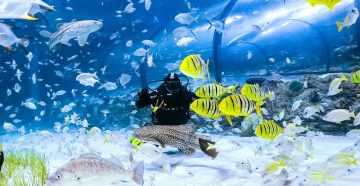
- Arabian Butterflyfish (those striking yellow and black patterns)
- Sobaity Seabream (a regional delicacy that looks much cuter swimming than on a plate)
- Moray Eels peeking out from replica coral formations
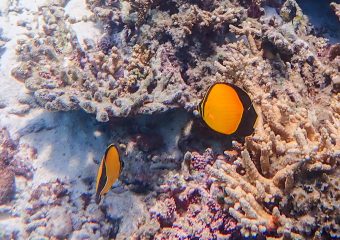
The educational placards here are fantastic. One note explained how mangroves (the UAE’s natural nurseries) are crucial for preventing coastal erosion. It sets a conservationist tone that carries through the rest of the visit.
Zone 2: Atlantic Cave
The temperature drops. The lights dim. You’re walking through a simulated underwater cave system representing the cold, dark waters of the North Atlantic. This is where the creepy-crawlies live.
- Lobsters stacking themselves like armored soldiers
- Sea Anemones waving their venomous tentacles
- Giant Spider Crabs that look like they walked out of a sci-fi film
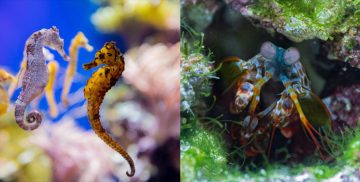
My toddler pressed his nose against the glass here for ten solid minutes. He was convinced the crabs were robots. (They are not. They are very real and very leggy.)
Zone 3: The Flooded Forest
This was my personal favorite. You leave the cold and enter a humid, green-lit room that mimics a South American jungle during a flood. The tank is shallow but wide, and it houses:
- Red-bellied Piranhas (yes, the famous flesh-eaters, though they seemed more interested in their floating lettuce lunch)
- Archerfish that spit water at insects above the surface (we watched one nail a target—incredible reflexes)
- Anacondas coiled in the branches above the water (thankfully behind reinforced glass)
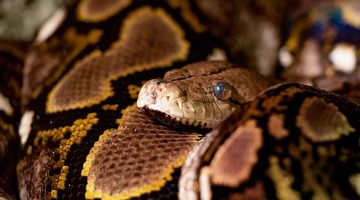
The audio design here is underrated. You hear dripping water, distant bird calls, and the occasional low rumble of “thunder.” It’s immersive to the point of forgetting you’re in a mall-adjacent building.
Zone 4: The Rocky Shores
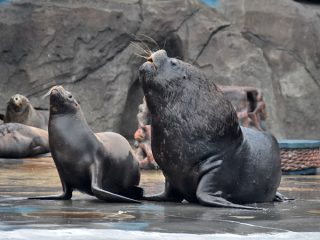
This open-topped zone simulates a Pacific coastline. Sea lions and otters live here, and they are the undisputed divas of the aquarium.
- Otters: We arrived during feeding time. The keeper tossed fish into the water, and the otters did that adorable back-floating trick while nibbling. One otter splashed a child in the front row. The child laughed. The otter looked smug.
- Sea Lions: They have a dedicated training and show area where keepers demonstrate enrichment activities (jumping through hoops, balancing balls). Importantly, these aren’t circus tricks—they’re exercises to keep the animals physically and mentally stimulated.
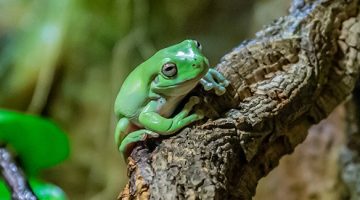
Zone 5: The Drowned Forest
This one is hauntingly beautiful. Submerged trees and roots create a labyrinth of shadows. The residents are catfish and freshwater stingrays that glide silently between the “branches.” It feels like swimming through a flooded graveyard in the best possible way.
Zone 6: The Tropical Ocean
Color explosion. This is the “Finding Nemo” zone, and it’s where you’ll lose track of time.
- Clownfish darting through anemones
- Blue Tang (Dory, for the kids in the room)
- Flame Angelfish (neon orange and electric blue)
- Banggai Cardinalfish (those striped, elegant slow-swimmers)
The coral here is mostly live, and the colors are so saturated you’ll check your phone to make sure you didn’t accidentally turn on a filter.
Zone 7: The Ocean Magic (The Tunnel)
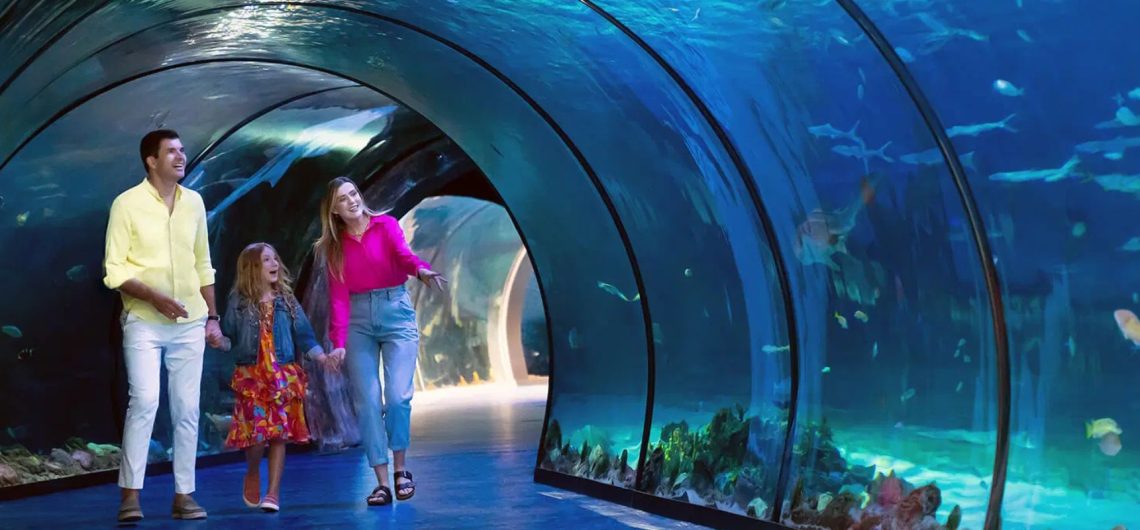
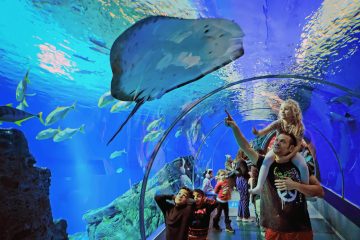
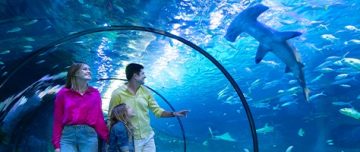
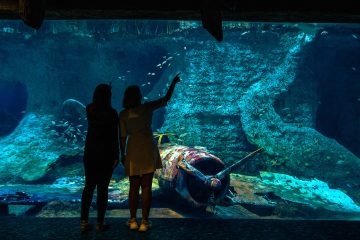
This is the crown jewel. A 20-meter walkthrough tunnel with a moving walkway (or you can walk on the stationary side if you want to linger). You are surrounded by 1.5 million liters of water.
Swimming above you:
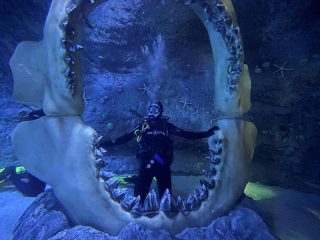
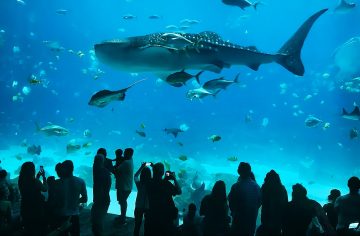
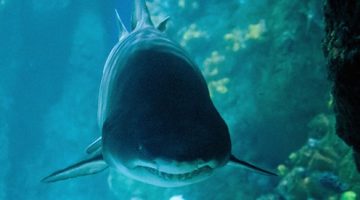
- Sand Tiger Sharks (they look terrifying with their exposed teeth, but the placard assures us they’re docile)
- Reef Sharks
- Giant Groupers (some as big as a compact car)
- Green Sea Turtles (graceful, ancient, and impossibly serene)
I laid down on the moving walkway (don’t tell security) and just stared up for a full rotation. My wife took a video. My kids screamed “SHARK!” every three seconds. It was perfect.
Zones 8-10: Stingray Bay, Deep Sea, & The Living Wall
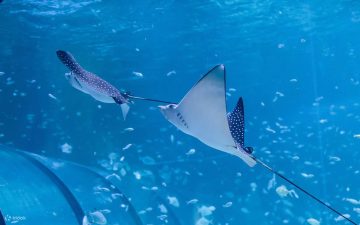
- Stingray Bay: A touch tank where you can pet cownose rays. Their skin feels like wet mushrooms. Weird but wonderful.
- Deep Sea: Bioluminescent displays and models of deep-sea creatures (anglerfish, giant squid). Most of these are too fragile to keep live, but the glow-in-the-dark effect is mesmerizing.
- The Living Wall: A vertical garden of 1,700 plants that filters the aquarium’s air naturally. A nice green breather before the gift shop.
Beyond the Walk: Unique Exhibitions & Experiences
According to their exhibitions page, the aquarium rotates special showcases. During my visit, there was a “Mythical Seas” temporary exhibit featuring folklore about mermaids and sea monsters. It was campy, educational, and the kids loved the “photo op with a kraken tentacle.”
Don’t miss these add-ons (book ahead through VooTours to guarantee slots):
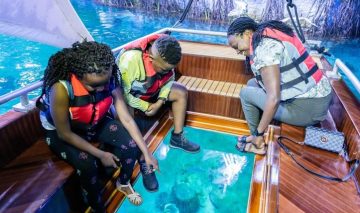
- Glass Bottom Boat: A 15-minute ride on a clear boat floating in the Ocean Magic tank. You see the sharks from above before walking under them. Unique perspective.
- Cage Snorkeling: For non-divers. You get into a metal cage lowered into the shark tank. You wear a snorkel mask and watch the predators circle 3 feet away. My heart rate still hasn’t recovered.
- Diving with Sharks: If you’re PADI certified, you can actually get in the water without a cage. A bucket-list item for serious divers.
Education & Conservation: The Soul of the Aquarium
This isn’t Sea World. This is a research and rehabilitation facility that happens to let you watch.
- Wildlife Rescue Program:
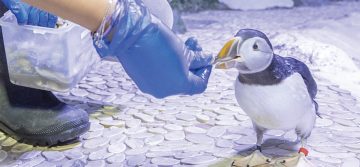
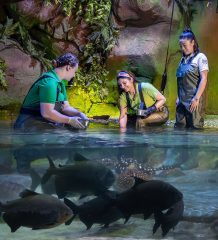
I spent an hour reading their wildlife rescue page before the trip, so I made sure to find the hospital area. They have a dedicated quarantine zone (visible through one-way glass) where injured sea turtles are nursed back to health. Most of the turtles here are victims of boat propellers or plastic ingestion. The aquarium has successfully released over 30 rehabilitated turtles back into the Arabian Gulf. You can even “adopt” a turtle online to fund their recovery.
- Junior Marine Biologist Program (Ages 6-12):
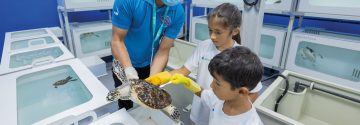
If you have kids, bookmark their Junior Marine Biologist page. It’s a 2-hour workshop where children:- Put on real lab coats and goggles
- Test the pH and salinity of tank water
- Prepare squid or shrimp for animal feedings
- Learn to identify different shark egg cases (“mermaid’s purses”)
- School Visits:
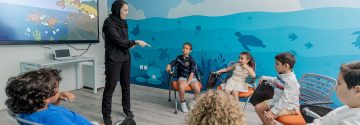
Teachers, take note. Their school visit page outlines curriculum-linked tours for KG to Grade 12. They cover topics like food chains, habitat destruction, and adaptation. Much better than a textbook.
- Birthday Parties: Yes, You Can Rent the Aquarium:
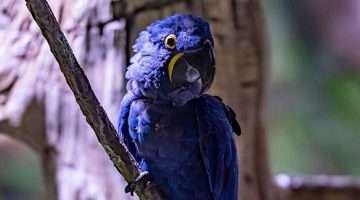
My wife is already planning this for our son’s 5th birthday. According to their birthday page, packages include:- A private party room overlooking the tanks
- A dedicated party host (so parents can actually sit down)
- Animal encounter (touch a starfish or feed a ray)
- Goodie bags with marine-themed toys
- Invitations designed like scuba certification cards
Logistics: How VooTours Made the Magic Happen
Here’s the part where I stop gushing about fish and start gushing about logistics.
I am an anxious planner. I had 4 adults, 2 toddlers, and 1 grandmother with mobility issues. The National Aquarium website is excellent, but I was getting overwhelmed: Do we need the VIP pass? Is the glass-bottom boat suitable for a stroller? Can Grandma do the tunnel walk or is there seating? What time are the otter feedings? Do we need to book the Junior Biologist program in advance?
I reached out to VooTours on a whim. Within 24 hours, a coordinator called me (yes, called me, not emailed) and walked me through everything.
Here is exactly what VootTours did for us:
- Custom Itinerary: They asked our group size, ages, and interests. Then they built a timed schedule:
- 10:00 AM: Arrival & priority entry (beat the crowds)
- 10:15 AM – 12:30 PM: Self-guided tour of 10 zones (with rest breaks scheduled at the café)
- 12:30 PM: Glass Bottom Boat booking (they secured the middle slot so we didn’t rush)
- 1:00 PM: Lunch at the aquarium café (they recommended the fish & chips—ironic, I know)
- 2:00 PM: Animal Encounter for the kids (stingray feeding)
- 3:00 PM: Gift shop & departure
- Ticket Bundling: They bundled aquarium entry + glass bottom boat + animal encounter at a price that was 15% cheaper than booking separately. They also told us the “Behind the Scenes” tour wasn’t worth it for toddlers (too much standing, too little animal action). Saved us money and boredom.
- Mobility Assistance: Grandma uses a walker. VooTours confirmed that wheelchairs are free to borrow at the entrance and that the entire aquarium (including the tunnel) is wheelchair accessible. They even marked where the elevators are on a map they sent us.
- Transport: We were staying in Dubai (JBR). VooTours arranged a private van with car seats for the two toddlers. The driver waited for us for 5 hours and drove us back. No haggling with taxis. No downloading yet another ride-share app.
- Last-Minute Change: One of the toddlers had a meltdown at breakfast. We were going to be an hour late. I messaged VooTours on WhatsApp at 9:15 AM. By 9:30 AM, they had rescheduled our glass bottom boat slot to 2:30 PM and moved the animal encounter to 3:00 PM. No fees. No drama.
Without VooTours, I would have been the dad angrily staring at his phone while his kids cried at the ticket counter. Instead, I was the dad lying on a moving walkway watching sharks swim overhead. VooTours didn’t just sell me tickets. They sold me peace of mind.
Practical Tips for Your Visit (From Someone Who Did It)
- Best time to go: Right when they open (10 AM on weekdays, earlier on weekends). By 1 PM, the tunnel is shoulder-to-shoulder.
- What to wear: Comfortable shoes. You’ll walk about 1.5 kilometers inside. It’s air-conditioned but the Flooded Forest zone is humid—dress in layers.
- Photography: Flash photography is not allowed in most zones (it stresses the animals). Bring a camera with good low-light capabilities. Your phone will do fine, but don’t expect National Geographic quality.
- Food: The on-site café is decent (sandwiches, salads, kid meals) but overpriced. There are dozens of restaurants in Al Qana outside the aquarium—eat there if you’re not in a rush.
- Souvenirs: The gift shop has the usual plushies and keychains, but also sells conservation-focused items (reusable water bottles, recycled plastic notebooks). Buy the sea turtle plushie. Part of the proceeds go to the rescue program.
Final Verdict: 5/5 Fins
The National Aquarium Abu Dhabi is not a “rainy day backup plan.” It’s a destination in its own right. It’s educational without being boring, thrilling without being exploitative, and massive without being exhausting. The fact that they run a legitimate wildlife rescue and offer legitimately cool programs (cage snorkeling! junior biologist lab coats!) puts it head and shoulders above most “aquariums” that are just fish in boxes.
Who is this for?
- Families with kids of any age (strollers welcome, teens will think it’s cool, toddlers will lose their minds)
- Date night (the tunnel at sunset is legit romantic—dim lighting, sharks circling, very “special episode of a nature documentary”)
- Solo travelers (easy to do in 2-3 hours, very Instagrammable)
- Teachers (the school programs are genuinely educational)
- Anyone who wants to do good while having fun (the rescue program alone is worth supporting)
Who is this not for?
- Extreme thrill-seekers (go skydiving instead)
- People who hate crowds (go on a Tuesday morning)
- PETA activists (the animals seem well-cared-for, but some people object to any captivity)
One Last Plug for VooTours
Look, you can book this all yourself. The National Aquarium‘s website is user-friendly. But if you have a group, or kids, or mobility needs, or just don’t want to spend your vacation playing travel agent—use VooTours.
They handled transport, tickets, timing, rescheduling, and even recommended a great shawarma place in Al Qana for after the visit (it’s called Man’oushe Street, go there, thank me later).