
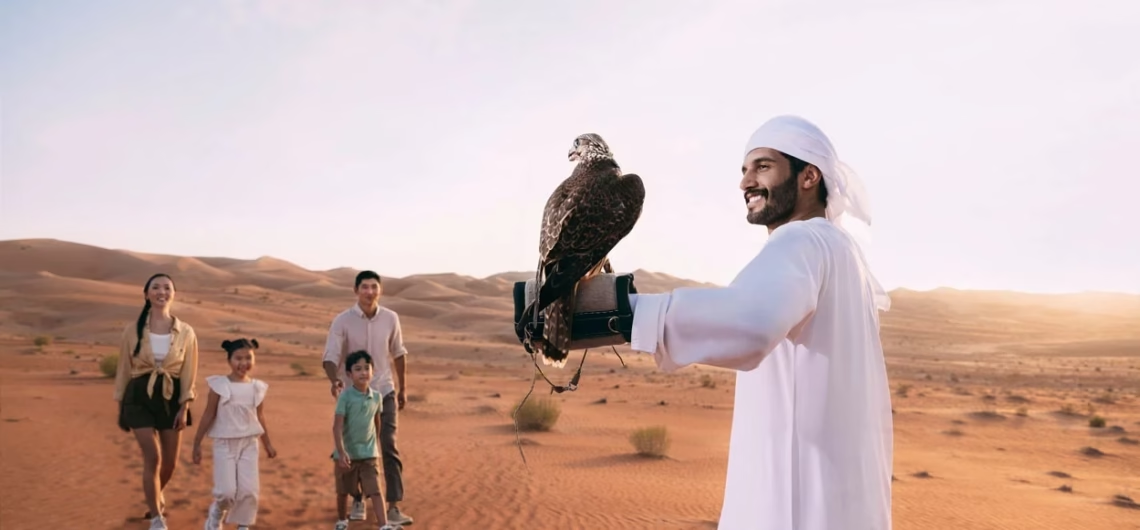
Welcome to Al Dhafra: The UAE’s Hidden Desert Gem
The first time I saw Al Dhafra, the desert stretched before me like a living dream. The sun hung low, setting the sands ablaze in gold and copper, while the wind hummed an ancient tune through the dunes. Somewhere in the distance, a lone camel ambled across the horizon, its silhouette a timeless echo of the Bedouin caravans that once ruled these lands.
This wasn’t just another desert—this was Al Dhafra, where the soul of Arabia still breathes.
I remember sinking my feet into the warm sand, feeling the earth shift beneath me as if whispering secrets. A falcon’s cry pierced the silence, a reminder that this land has been shaped by the fierce beauty of nature and the quiet resilience of those who call it home. By night, the sky became a sea of stars, so vast and bright that it felt like the heavens had spilled open just for us. Around a crackling fire, the scent of cardamom-laced coffee mingled with stories of old—tales of pearl divers, desert poets, and moonlit feasts under endless skies.
Al Dhafra doesn’t just welcome travelers; it enchants them. It’s where adrenaline rushes meet quiet reflection—where you can race a 4×4 up towering dunes at sunset, then lose yourself in the stillness of a thousand-year-old oasis. It’s where heritage isn’t just preserved; it’s lived, in the call of the muezzin at dawn, in the intricate patterns of a handwoven sadu tapestry, in the warmth of a stranger’s “Marhaba” as you share dates and conversation.
So come, step off the beaten path. Let the desert wind guide you, let the stories of the land unfold around you. Al Dhafra isn’t just a destination—it’s an awakening.
The Spirit of the Sands: What Makes Al Dhafra Special
There’s something about Al Dhafra that lingers in your soul long after you leave. It isn’t just the golden dunes that roll like ocean waves under the sun, or the way the stars blaze brighter here than anywhere else. It’s something deeper—an invisible thread tying you to the land, to its stories, to the whispers of the wind that carry centuries of secrets.
- A Desert That Feels Alive
Close your eyes and listen. The sands of Al Dhafra sing. The wind sculpts the dunes into ever-changing masterpieces, while the rare ghaf trees stand as silent sentinels, their roots digging deep into memory. This isn’t a barren wasteland—it’s a living, breathing world where every ripple in the sand tells a story.

- The Bedouin Heartbeat
The spirit of the Bedouin still thrives here. You’ll feel it in the hospitality—the way a stranger becomes family over steaming cups of gahwa (Arabic coffee) and sweet dates. You’ll hear it in the tales of falconry, where hunters and birds share an unbreakable bond, and in the rhythmic sway of camels that once carried traders across these very sands.

- A Sky That Steals Your Breath
When night falls, the desert transforms. With no city lights to dim its brilliance, the Milky Way stretches overhead like a river of diamonds. Sitting by a fire, wrapped in the silence of the dunes, you’ll understand why ancient travelers used the stars as their guide—and why Al Dhafra’s night sky feels like a secret just for you.

- Adventures Written in Sand
For thrill-seekers, the desert is a playground. Race over dunes in a 4×4, try sandboarding down slopes of golden silk, or ride a camel into the horizon at sunset. But for those who pause, Al Dhafra offers quieter magic—the joy of finding a desert flower pushing through the sand, the peace of a solitary walk as the sun dips below the dunes.
- A Heritage That Refuses to Fade
From the annual Al Dhafra Festival—where camel races, traditional crafts, and Emirati poetry keep culture alive—to the quiet dignity of a shepherd guiding his flock across the sands, this is a place where the past and present walk hand in hand.
Al Dhafra doesn’t just show you the desert—it lets you feel it. It’s raw, real, and utterly unforgettable.

Desert Festivals & Bedouin Beats
The first time I heard the rhythmic thump of the tabl drum echoing across the dunes at sunset, I understood—Al Dhafra’s desert isn’t silent. It pulses.
Every year, when the winter winds cool the sands, this remote corner of the UAE transforms into a stage for traditions older than skyscrapers. The Al Dhafra Festival isn’t just an event; it’s a living museum of Bedouin soul.
Here’s what makes it magic:
- Camel Beauty Pageants: Where the Desert’s Supermodels Strut
Yes, you read that right. Thousands of camels—groomed, postured, and draped in finery—parade before judges in a competition of elegance and pedigree. The air hums with handlers’ poetic chants, urging their prized “asayel” (light-colored camels) to flaunt their grace. The prize? Golden rifles, luxury cars, and eternal bragging rights.

- Falconry: The Sky’s Ancient Dance
Witness the razor-sharp partnership between hunter and bird as falcons dive at breakneck speeds, their jingling bells ringing like desert wind chimes. This isn’t sport; it’s a 4,000-year-old conversation between man and nature.

- Date Mazayna: Sweetness as an Art Form
Rows upon rows of plump dates glisten under palm-frond shades, competing for titles like “most succulent” or “perfectly golden.” Taste-testing is encouraged—your fingers will stick together for hours, and you won’t mind.

- Sadu Weaving: Threads That Tell Stories
Elderly Emirati women, fingers flying over looms, demonstrate sadu—the geometric wool-weaving technique UNESCO declared a cultural treasure. Each pattern holds meanings: zigzags for mountains, diamonds for unity. You’ll leave craving a tapestry (and the wisdom woven into it).

- Nightfall Revelry: Poetry, Fire, and Stars
As temperatures drop, the festival ignites. Bedouin poets recite verses older than nations, their words rising and falling like dunes. Smoke from grilling majboos (spiced rice) mingles with oud music, while kids race through the crowds with glow sticks—proof that tradition and joy need no translation.
Why It Matters:
These aren’t performances for tourists. They’re a defiant celebration of identity, where Emiratis in kanduras and abayas teach their children the old ways—not in books, but through living them.
Come hungry. Come curious. But most of all, come ready to feel the desert’s heartbeat.

Golden Dunes & Starry Skies: Top Outdoor Adventures
The desert doesn’t just welcome adventure—it demands it. In Al Dhafra, every dune is a challenge, every sunset a spectacle, and every night under the stars a chance to rewrite what you thought was possible. Here’s how to answer the call of the sands:
- Dune Bashing: Rollercoasters Made by Nature
Buckle up. Climbing Al Dhafra’s towering dunes in a 4×4 isn’t just driving—it’s a physics-defying dance. Local drivers (who seem part-human, part-sand spirit) will have you skimming knife-edge ridges, plunging down slopes, and laughing so hard you’ll forget to scream. Tip: Sunset sessions turn the desert into a liquid gold playground.

- Sandboarding: Surf the Silk Road
Strap a board to your feet and ride the dunes like a Bedouin snowboarder. Whether you stand or sled on your belly, the rush of flying down velvet-soft sand is pure, childlike joy. Bonus: Wiping out here doesn’t hurt—it just means you’ll leave with pockets full of memories (and sand).

- Camel Treks: Slow Travel, Deep Magic
Swap horsepower for camel power. At golden hour, let these “ships of the desert” carry you across the sands at a rhythmic pace. The world narrows to the sound of their footsteps and the endless horizon—the antidote to modern life’s rush.

- Stargazing: When the Universe Drops Its Guard
With zero light pollution, Al Dhafra’s night sky is a dazzling crime scene—the Milky Way smeared across black velvet, shooting stars betraying their secrets. Local guides will point out constellations named by Bedouins millennia ago (Pro tip: Pair this with an overnight campfire for full cosmic awe).
- Oasis Hikes: Where the Desert Whispers
Yes, water hides here. Follow hidden trails to emerald pockets like Liwa Oasis, where date palms tower over freshwater springs. The contrast of lush green against burnt orange dunes feels like stumbling upon a mirage—except it’s real.

- Full-Moon Desert Camps: Sleep Like a Nomad
Pitch a tent (or glamp in a Bedouin-style camp) and let the desert silence lull you to sleep. Wake at dawn to find your footprints the only marks on miles of untouched sand—a rare kind of ownership in this world.
Al Dhafra doesn’t just offer adventures; it offers transformations.

Coastal Treasures: Beaches, Mangroves & Marine Life
Most travelers come to Al Dhafra for the desert—but few realize its coastline holds just as much magic. Where golden sands meet turquoise waves, a world of hidden beaches, thriving mangroves, and playful marine life waits to be discovered.
- Mirfa Beach: The Desert’s Turquoise Edge
Imagine this: One side, endless dunes. The other, the sparkling Arabian Gulf. Mirfa Beach is where Bedouin heritage meets coastal serenity. Swim in calm, shallow waters, or try kayaking at sunrise when the sea mirrors the pastel sky. Local tip: Stay for a seafood feast at a beachside grill—fresh-caught hamour and grilled shrimp are a must.

- Al Dhafra’s Mangroves: A Hidden Green Wonderland
Paddle through serene mangrove channels, where roots twist like nature’s artwork and flamingos wade through shallow waters. These quiet forests are nurseries for fish, crabs, and migratory birds—a stark, beautiful contrast to the surrounding desert. Best explored by kayak at high tide.

- Delma Island: Pearl Diving & History
Step back in time on this island, once the heart of the UAE’s pearl trade. Wander its historic pearl merchant houses, then cool off in crystal-clear waters where divers once harvested oysters. Today, snorkelers can still spot rays, sea turtles, and even dugongs (the elusive “sea cows” of the Gulf).

- Al Sila’a: A Fisherman’s Paradise
This sleepy coastal town is where local fishermen haul in the day’s catch at dawn. Join a traditional fishing trip to try your hand at netting kingfish or jumbo shrimp, or simply watch the boats bob against a fiery sunset.

- Marine Encounters: Dolphins & Whale Sharks
Hop on a boat tour from Ruwais or Jebel Dhanna, where pods of playful dolphins often race alongside the bow. If you’re lucky, you might spot a gentle whale shark gliding through the Gulf’s warm waters (peak season: April-October).

Where Time Slows Down: Heritage Villages & Forts
In Al Dhafra, the past isn’t just remembered—it lives. Wandering through its weathered forts and heritage villages feels like stepping into an old black-and-white photograph that’s somehow still in color. Here, the desert wind carries whispers of pearl divers, Bedouin poets, and merchants who once traded under the stars.
- Al Mirfa Heritage Village: A Time Capsule by the Sea
This reconstructed fishing village is where the salt-crusted soul of old Arabia still breathes. Weathered wooden dhows rest on the shore, their hulls etched with decades of seafaring tales. Peek into traditional barasti (palm-frond) houses where families once slept to the lullaby of waves. Don’t miss: The tiny pearl diving exhibit, where rusty weights and woven baskets tell stories of danger and fortune.

- Qasr Al Sarab’s Hidden Forts: Sentinels of the Sands
Scattered like forgotten chess pieces across the desert, the region’s mudbrick forts—Al Dhafra Fort, Al Maqtaa Tower—stand as stubborn guardians of history. Climb their creaky staircases to imagine watchmen scanning the horizon for raiders, or caravans emerging from the haze. Fun fact: Many were built not for war, but to protect precious freshwater wells.

- Liwa’s Date Palm Villages: Oasis Life Unchanged
In the shadow of towering date palms, villages like Hameem and Taraq still move to the rhythm of harvest seasons. Follow the scent of roasting Arabic coffee to courtyards where elders sort dates on woven mats, their hands mapping generations of knowledge. Try: Fresh khalas dates, so succulent they taste like caramel.

- Baynunah Fossil Village: A Desert Pompeii
This eerie, abandoned settlement near Ruwais is a ghost town of coral-stone homes, frozen in the 1970s when its residents moved to modern housing. Faded murals of palm trees and mosques still cling to walls, while the wind howls through empty doorways. Hauntingly beautiful at golden hour.

- Al Gharbia’s Camel Market: Where Tradition Haggles
Near Al Mirfa, this bustling market is one of the last places where Bedouins trade camels the old-school way—with rapid-fire Arabic, handshakes, and cash tucked into robe pockets. Watch as handlers check teeth and hooves like used-car salesmen inspecting engines.
Why These Places Matter
They’re not museums. At sunset, when the call to prayer echoes off mudbrick walls and fishermen mend nets by lantern light, you’ll realize: This is the UAE before oil, before glass towers—a world where time moved by the moon, not minutes.

Getting There & Staying There: Travel Tips
By Road (The Classic Adventure):
- From Abu Dhabi, take the E11 highway toward Tarif (~2-2.5 hours to Mirfa/Ruwais).
- For Liwa, follow the E65 through the iconic Empty Quarter—a hypnotic drive where dunes loom like skyscrapers.
- Pro Tip: Rent a 4×4. Google Maps can falter here; download offline maps and watch for camel crossings!
By Air (For Time-Savers):
- Fly into Abu Dhabi International (AUH), then drive or book a private transfer (~3 hours to Liwa).
- Bonus: Helicopter tours from Abu Dhabi offer jaw-dropping aerial views of the desert-sea contrast.
Where to Stay: From Bedouin Tents to Luxury Oases
- For Authentic Nomadic Vibes:
- Liwa Nights Camp – Sleep under stars in handwoven tents, wake to freshly baked khubz bread. (Budget-friendly)
- Al Dhafra Desert Camp – Private tents with en-suite bathrooms + sunset camel rides included.
- For Splurge-Worthy Magic:
- Qasr Al Sarab by Anantara – A fortress of luxury rising from the dunes. Think: infinity pools overlooking the Empty Quarter.
- Telal Resort Al Ain – Heritage villas with private pools, blending Emirati architecture with modern comfort.
- Coastal Escapes:
- Danat Resort Jebel Dhanna – Beachfront oasis with killer seafood buffets and dolphin-spotting boat tours.
Al Dhafra Through My Eyes: A Personal Reflection
The first time I truly saw the desert, it was through a cracked car window at 4:17 AM.
I’d been driving for hours through the ink-black emptiness between Abu Dhabi and Liwa, chasing a local guide named Hamad who swore the best desert stories began before dawn. My coffee had gone cold. My phone had lost signal miles back. Then—just as I was about to demand we turn around—Hamad killed the engine and said: “Wait.”
Silence flooded in.
Then, like a slow-motion miracle, the horizon began to bleed gold. The dunes—monstrous waves frozen mid-crash—woke up all at once, their crests catching fire while their shadows stretched long and blue behind them. A desert fox darted across our path, pausing just long enough to meet my gaze with eyes that held centuries of secrets.
“Now you understand,” Hamad murmured. “The desert doesn’t hurry. But it always arrives.”
The Lesson of the Unstuck Toyota
Three hours later, our Land Cruiser was buried up to its axles in soft sand. Instead of panicking, Hamad unfolded a frayed carpet, produced a dented kettle, and began brewing tea over a tiny propane flame. “Every problem has its solution,” he said, handing me a steaming cup as two Bedouin boys materialized from nowhere with a shovel. By the time we were freed, I’d learned:
- How to read dunes like road signs (the darker the sand, the firmer the ground)
- Why camels have three eyelids (sand, always sand)
- That the best stories happen when plans fail
The Night the Stars Fell
At the dune camp, an Emirati grandmother named Umm Yusuf pressed a date into my palm with hands like sunbaked leather. “Eat,” she commanded. “The sky is about to perform.”
As the last light faded, the Milky Way erupted—so bright it cast faint shadows. Umm Yusuf pointed to constellations I’d never seen, reciting names passed down through generations: “That one is Al Thurayya—the Pleiades. When they appear, we plant. When they vanish, we harvest.”
A shooting star streaked overhead. “Make a wish,” I whispered.
“Why?” Umm Yusuf laughed. “The desert already gives what you need.”
The Sand That Followed Me Home
On my last morning, I woke early and walked barefoot into the dunes. The sand was cool and fine as powdered silk between my toes. Somewhere ahead, the faint jingle of camel bells echoed.
I scooped up a handful—let it trickle through my fingers—and suddenly understood why Bedouins measure journeys not in miles, but in stories.
Now, back in my city apartment, there’s still sand in my backpack. I don’t sweep it away. Some mornings, when the world feels too loud, I rub a grain between my fingers and remember:
The desert is patient.
The stars are generous.
And the best adventures begin when you’re good and lost.